
What’s ailing the rupee this year and what lies ahead

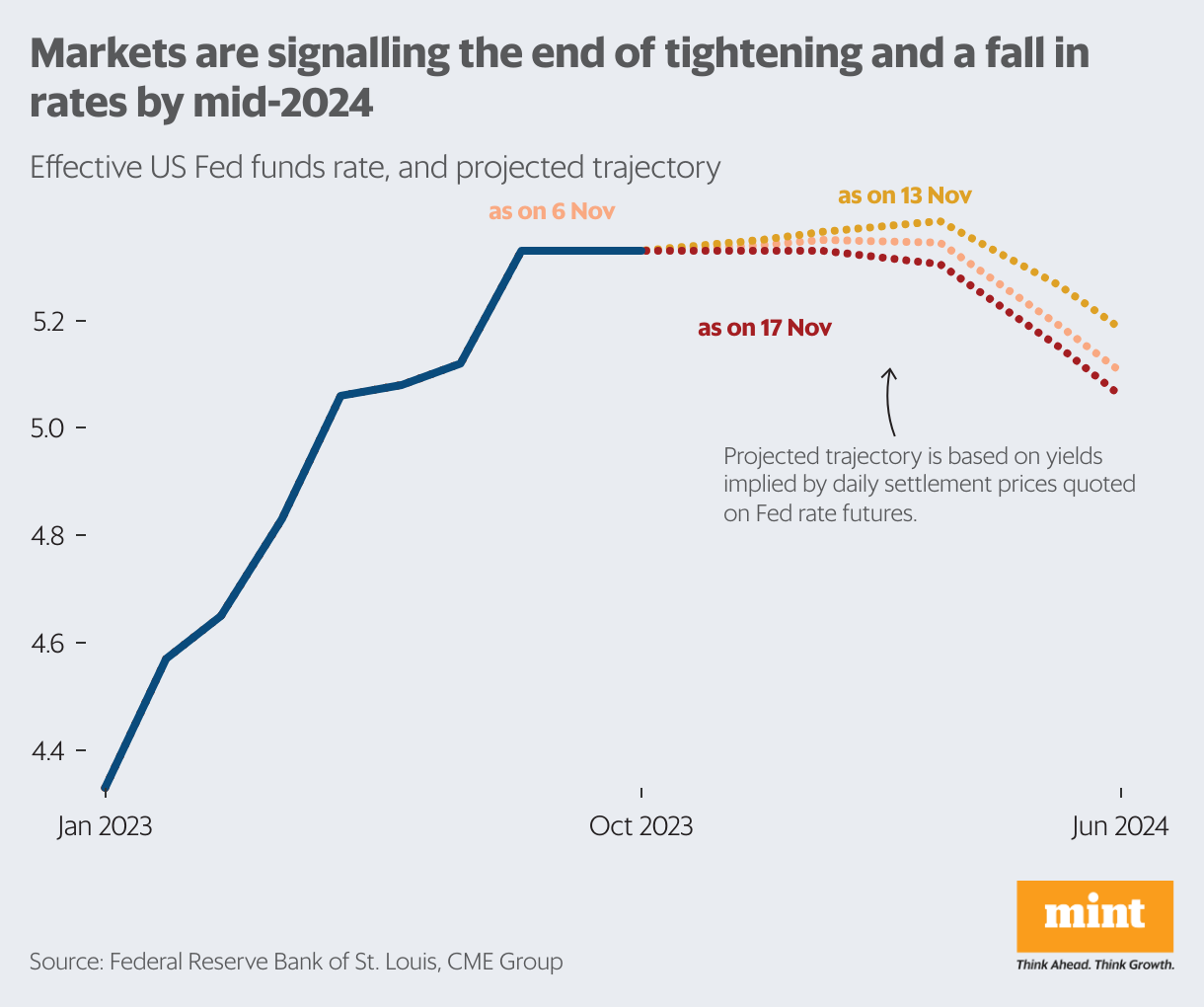
This month, three key central banks—the US Federal Reserve, the European Central Bank and the Bank of England—held their benchmark interest rates after an unprecedented series of hikes. After the announcements, bond yields dropped and currencies strengthened in a sign that markets had been hoping for a turn in the rate cycle. The rupee firmed up too, but just for a day, after which it languished at around 83 to a dollar. This lacklustre performance is at odds with all the good economic news coming out of India—strong economic growth, robust consumption, favourable demography, and steady public investment. What makes the rupee weaker, year after year?
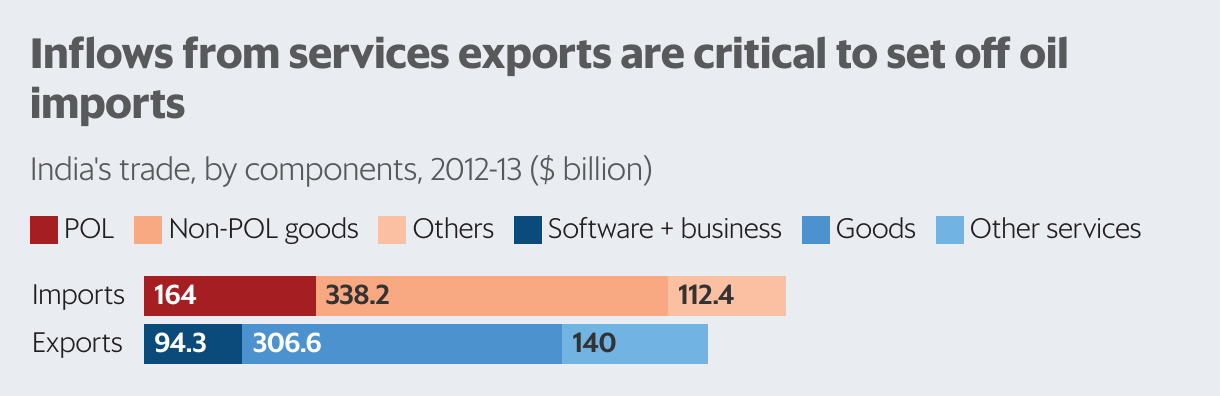
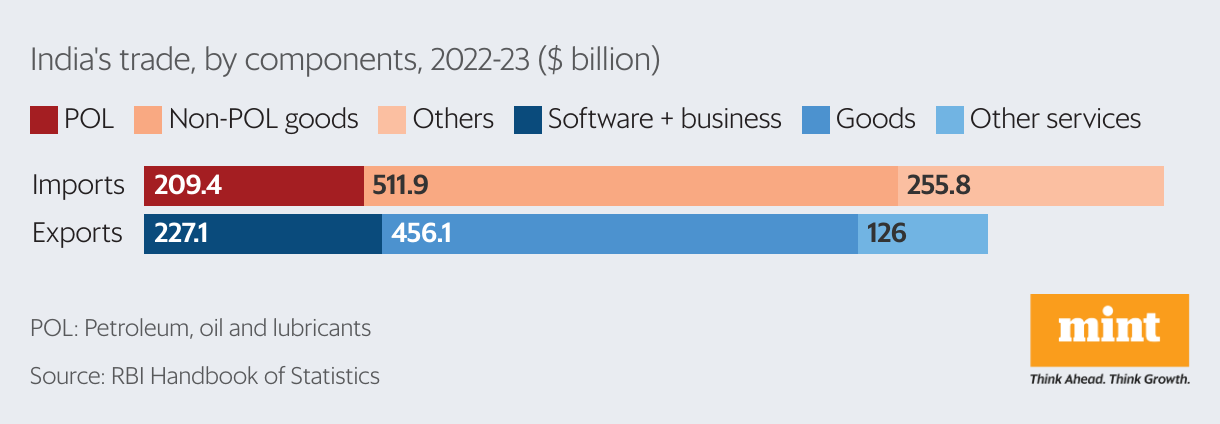
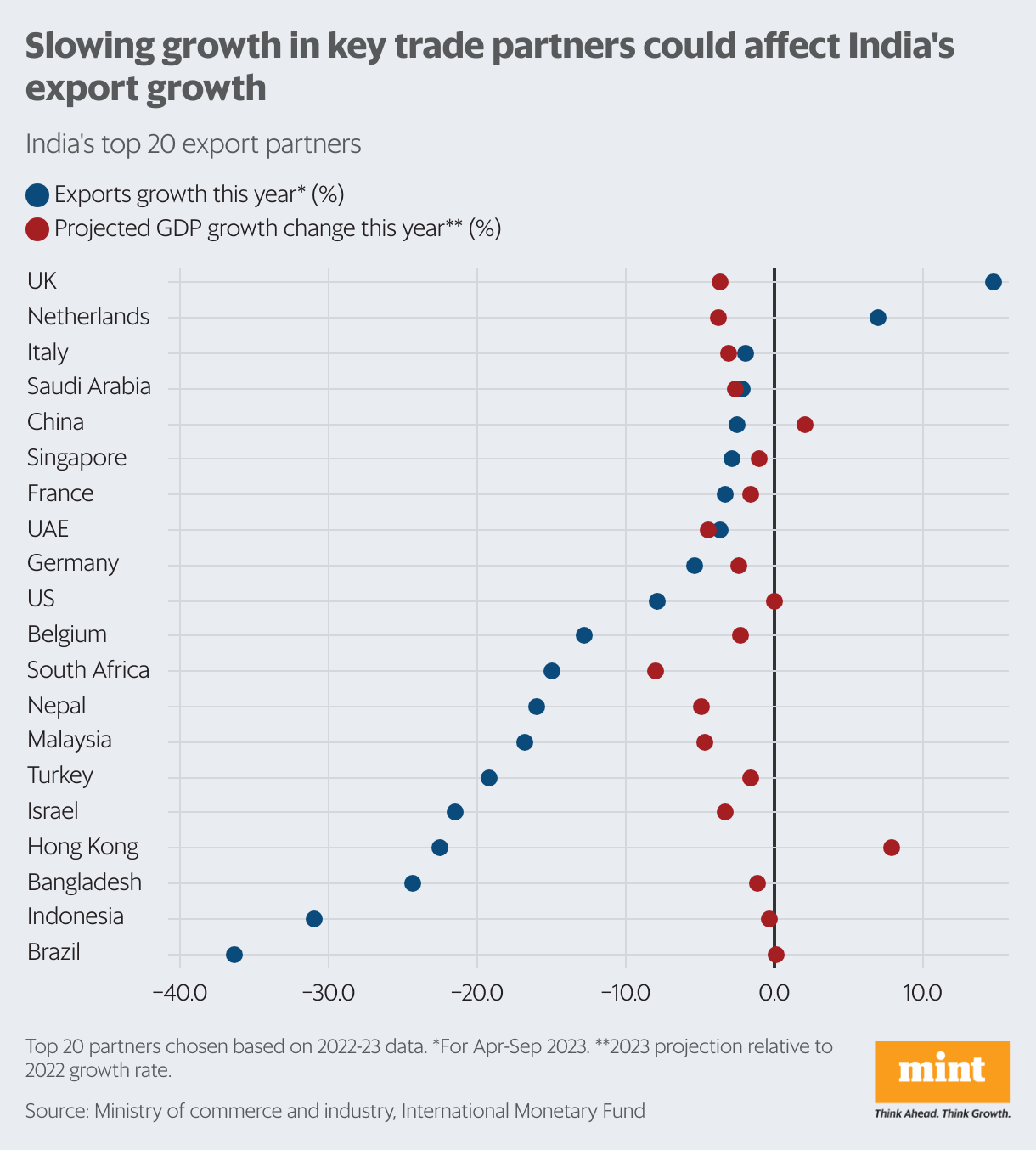
Slicing India’s current account into its components reveals its structural vulnerabilities. One, the rupee is starkly exposed to international crude oil prices. Oil imports account for around 30% of India’s goods import bill, and have been at that level over the last decade. The conflict in West Asia and a recent upgrade in global oil demand have increased the upside risk for oil prices. Two, while dollar earnings from software and business services since 2021-22 have been enough to cover oil imports, a 2.7% fall in services exports in September 2023—the first contraction in 2023-24—puts this cushion at risk (data for October is provisional). Finally, 18 of India’s top 20 export partners are predicted to slow down in 2023 and 2024. The resulting loss in import demand could threaten goods exports from India. Each of these outcomes—with the potential to worsen the current account deficit—weigh on the exchange rate.
Pre-election jitters
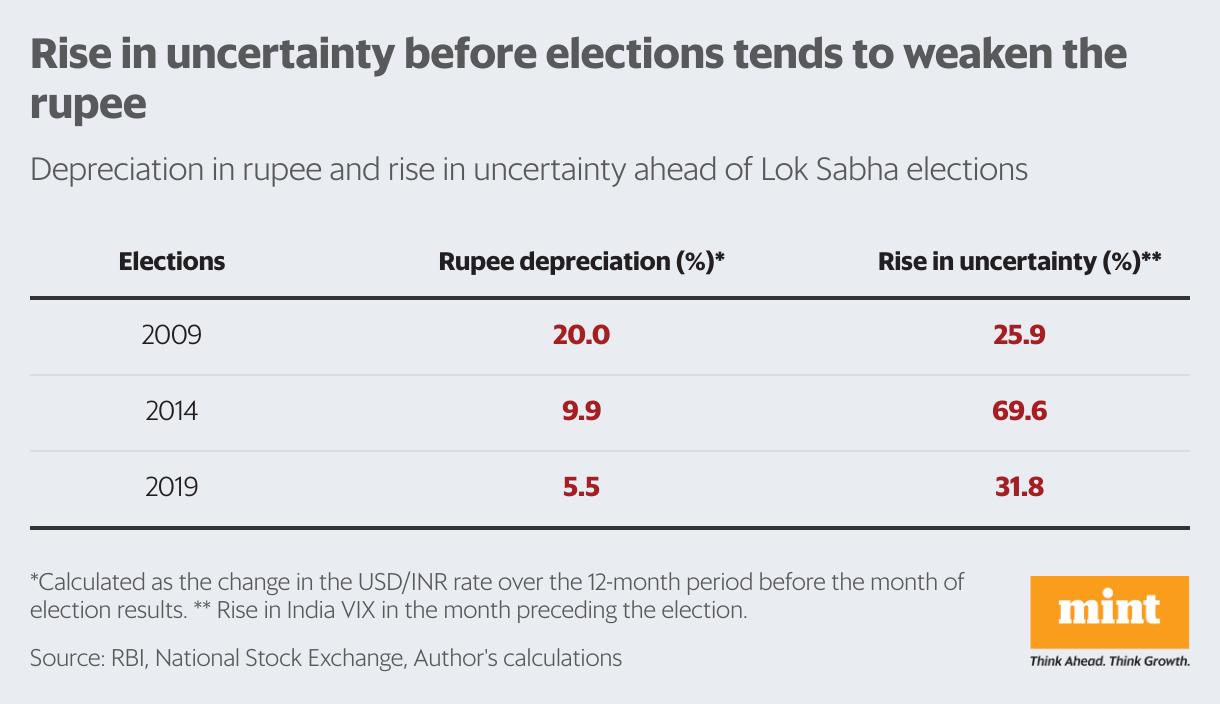
The rupee has depreciated before each of the past three general elections. If this trend is maintained, then some weakening of the exchange rate is likely in the months leading up to Lok Sabha elections in April-May 2024. Elections create an environment of uncertainty. Perceived risks include the formation of an unstable coalition government, existing policies being discontinued or even overturned, and excessive pre-election expenditure to woo voters that could worsen the fiscal deficit. Investors react to political uncertainty by becoming cautious. Capital investment may be postponed until a favourable administration is elected and in office.
Assembly elections in five states have already started the season of freebies and pre-poll promises. Some of these, such as handouts and subsidies, boost consumption in the short run, but may be fiscally irresponsible, especially for states that are close to breaching their fiscal deficit limits.
Dollar returns
The rupee faced a double whammy last year: trade deficit soared after the pandemic, and dollar inflows dwindled with rising US interest rates. Foreign inflows remain volatile this year too, for which, ironically, the rupee’s depreciation is at least partly responsible. On top of the 10.8% fall in 2022, the rupee has depreciated by 0.7% in 2023 so far. A weaker rupee reduces dollar returns to foreign investors: some of the recent sell-offs by foreign portfolio investors in equities could be attributed to relatively poor returns on the dollex.

The inclusion of India into the JP Morgan Government Bond Index for Emerging Markets from mid-2024 is expected to boost debt markets as well as the rupee. But until then, the spread between 10-year US and Indian treasuries, now at 2.7%, may not be attractive enough for foreign investors given the steady weakening of the rupee.