
Indian Equities Post Sixth Consecutive Weekly Loss as Macro Headwinds and IPO Pipeline Drain Liquidity

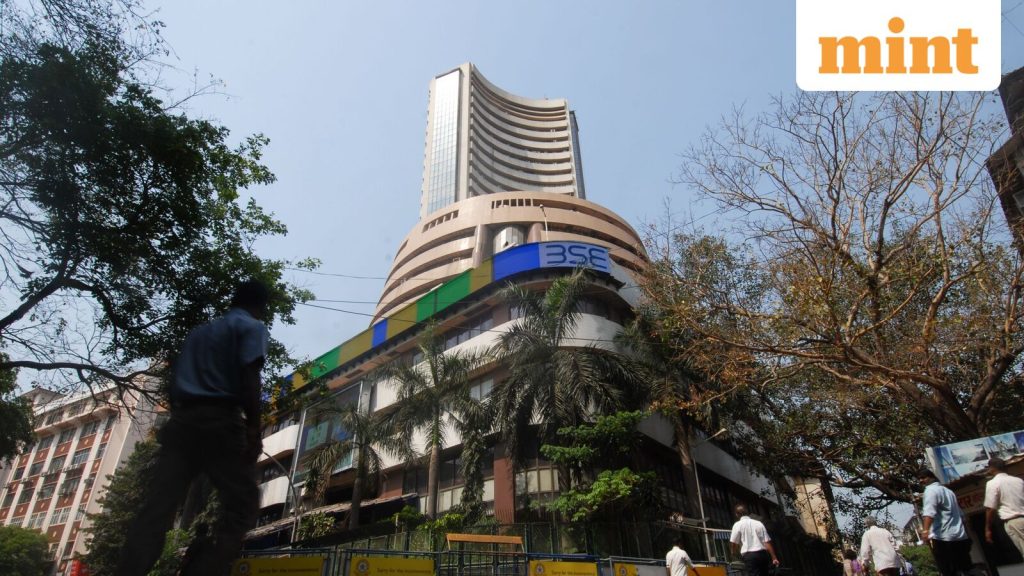
Six-Week Downturn Signals Caution in Indian Equities
Indian benchmark stock indices recorded their sixth consecutive weekly decline, underscoring a prolonged phase of consolidation and risk aversion on Dalal Street. While a recent softening in global crude oil prices provided temporary relief on macro inflation fronts, it proved insufficient to offset a confluence of domestic and global headwinds. Equity markets have remained under pressure as persistent foreign capital outflows, corporate governance and structural concerns surrounding major conglomerates, and a historic wave of initial public offerings (IPOs) draining secondary market liquidity continue to weigh heavily on investor sentiment.
Broader market indices, including the Nifty 50 and the BSE Sensex, have seen consistent erosion in valuation multiples over the past month. Analysts note that while corrections are a normal feature of long-term bull markets, the duration and breadth of the current downturn reflect growing cautiousness among institutional and retail market participants alike.
Key Drivers Behind the Prolonged Market Pullback
The sentiment on Indian trading floors has been shaped by a complex interplay of microeconomic and macroeconomic factors. Rather than a single catalyst, market observers point to several overlapping triggers that have sustained the downward pressure over six straight weeks.
1. Crude Oil Volatility and Macro Dynamics
Crude oil prices have historically maintained a direct bearing on India’s macroeconomic stability, given the nation’s reliance on imported energy to meet over 80 percent of its domestic demand. Although international crude benchmarks retreated from recent high levels due to demand concerns in major global economies and rising non-OPEC supply, market volatility remains elevated. Geopolitical tensions in Eastern Europe and the Middle East continue to inject uncertainty, preventing a full risk-on rally despite lower energy spot prices.
2. Corporate Headwinds and Tata Group Concerns
Investor confidence was further tested by emerging developments and structural uncertainties across key heavyweights, including specific entities within the Tata Group conglomerate. As one of India’s most respected and widely held business groups, any sector-specific sluggishness, regulatory shifts, or earnings reassessments among Tata enterprises tend to have a magnified impact on benchmark indices. Traders moved to de-risk portfolios ahead of upcoming earnings guidance and strategic clarity from group management.
3. Liquidity Siphon: The IPO Pipeline Surge
A major factor unique to the current market environment is the unprecedented activity in the primary market. A high volume of large-scale Initial Public Offerings (IPOs) launched in rapid succession has absorbed substantial capital from both institutional and retail investors. When primary offerings attract billions of dollars in subscriptions, capital is temporarily locked up or diverted away from secondary equity markets. This liquidity siphon has left existing listed shares vulnerable to selling pressure in the absence of fresh cash inflows.
4. Sustained Foreign Institutional Investor (FII) Outflows
Foreign Institutional Investors (FIIs) have maintained a steady selling stance in Indian equities over recent weeks. Higher real yields on United States Treasury bonds and a resilient US Dollar have prompted global fund managers to reallocate capital toward developed markets or safer fixed-income instruments. Additionally, rich valuations in Indian mid-cap and small-cap stocks compared to other emerging markets have led international funds to rebalance their regional asset allocations.
Sectoral Impact and Market Breadth
The ongoing correction has not affected all segments uniformly, but market breadth has persistently tilted in favor of declines. Key sectors that previously led the rally, such as banking, financial services, auto, and consumer discretionary, faced targeted profit-booking. On the other hand, defensive sectors like Information Technology (IT) and Pharmaceuticals displayed relative resilience, though they were unable to steer the headline indices into positive territory.
- Financials & Banking: Weighted down by margin compression worries and asset quality monitoring amid elevated domestic interest rates.
- Automotive & Industrials: Moderating demand post-festive season led to selective profit-taking across auto OEM stocks.
- Information Technology: Showed minor resilience aided by a softer Indian Rupee, offering partial downside protection.
- Small-cap and Mid-cap Indices: Experienced sharper corrections than large-cap benchmarks, reflecting a broader pullback in retail enthusiasm.
Historical Context and Valuation Realities
To understand the current market stance, it is essential to contextualize the pullback within India’s multi-year structural bull run. Over the past three years, domestic indices surged to record highs, driven by robust corporate earnings growth, strong retail participation via Systematic Investment Plans (SIPs), and favorable macroeconomic fundamentals. However, rapid capital appreciation pushed price-to-earnings (P/E) multiples well above historical averages.
The current six-week losing streak represents a necessary valuation digestion phase. Historical market cycles demonstrate that extended periods of primary market activity combined with foreign fund rotation frequently lead to temporary consolidation phases, allowing corporate earnings to catch up with equity pricing.
Analyst Perspectives and Outlook for Investors
Market strategists suggest that while short-term sentiment remains cautious, India’s long-term growth story remains fundamentally intact. Market participants are advised to monitor key technical support levels on headline indices while keeping a close eye on incoming macroeconomic indicators, including domestic retail inflation, central bank policy signals, and quarterly corporate earnings releases.
For long-term investors, market pullbacks driven by temporary liquidity shifts often present strategic accumulation opportunities in high-quality, fundamentally sound companies. However, analysts emphasize the importance of portfolio diversification and disciplined asset allocation until clear signs of trend reversal emerge in secondary market liquidity and foreign capital flows.
Conclusion
The six-week losing streak in Indian equities highlights the complex interaction between global macro forces, primary market supply, and stock-specific developments. Although a retreat in crude oil prices offers fundamental relief to India’s fiscal position, secondary market liquidity constraints and cautious foreign flows have kept benchmark indices under pressure. As primary market offerings normalize and global interest rate trajectories become clearer, market participants will be watching closely for stabilization signs on Dalal Street.