
2023 review: How funding winter continued for Indian startups

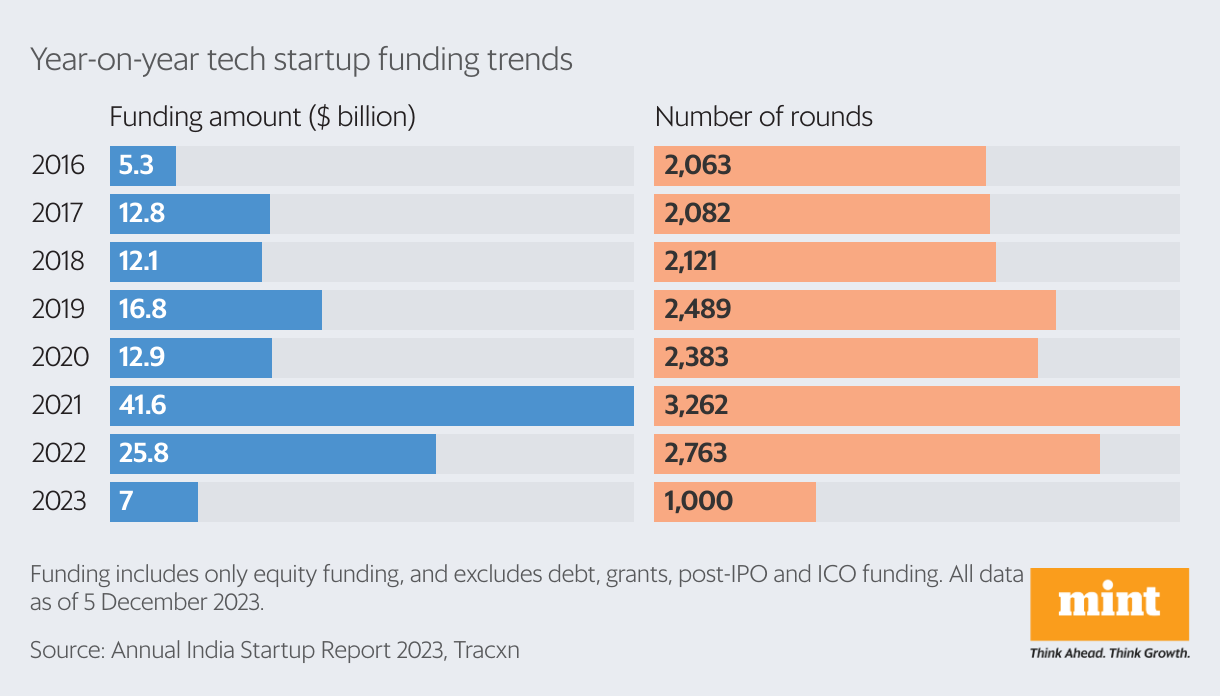
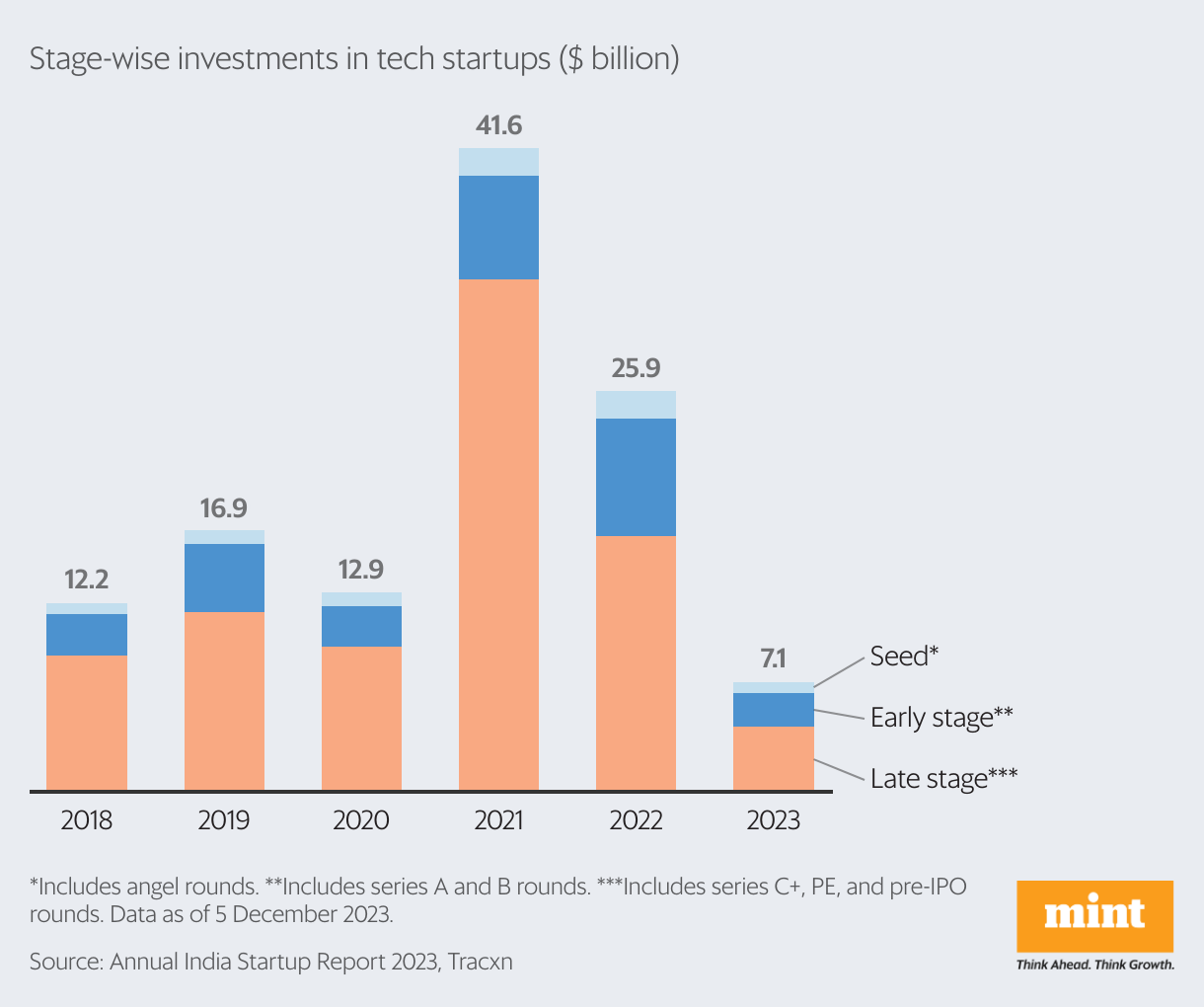
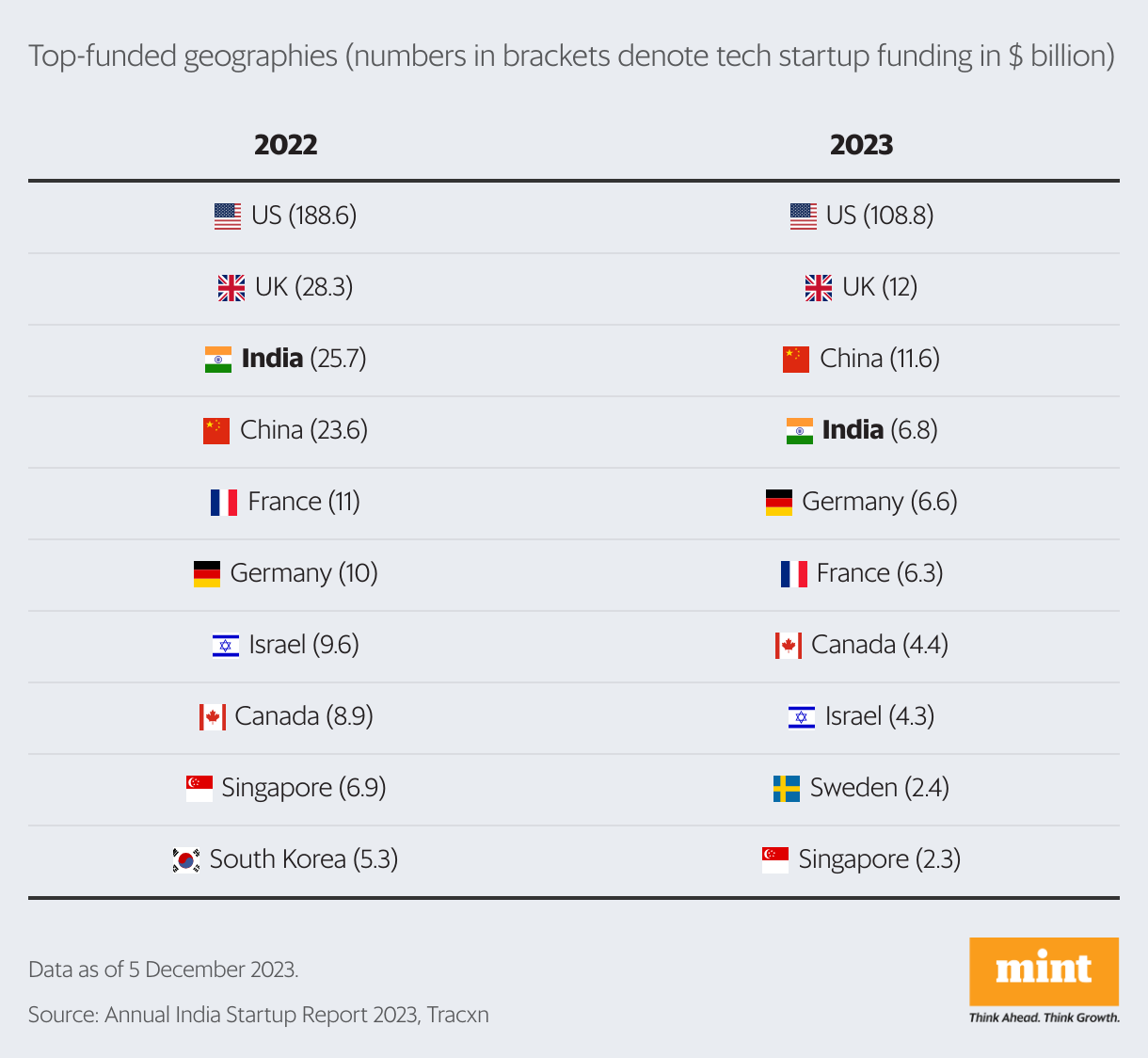
The Indian startup ecosystem continued to grapple with a funding slowdown in 2023. The funding during the year hit a five-year low of $7 billion, taking India’s global ranking from third to the fourth place. The funding has declined across all stages, with late-stage funding witnessing the biggest drop of 73% to $4.2 billion in 2023 so far. Besides, the year saw just 17 rounds worth $100-million-plus funding, against 55 in the corresponding period last year. Mint presents some dismal trends captured by the Annual India Startup Report released last week by data intelligence platform Tracxn.
Slowdown bites
The total funding received by Indian startups declined by 72% in 2023. The ongoing quarter (Q4) has so far recorded funding of $957 million, and it’s set to be the lowest-funded quarter since Q3 of 2016, according to the Tracxn report. Late-stage funding dropped over 73%, followed by early-stage funding (70%) and seed-stage funding (60%).
Squeeze all over
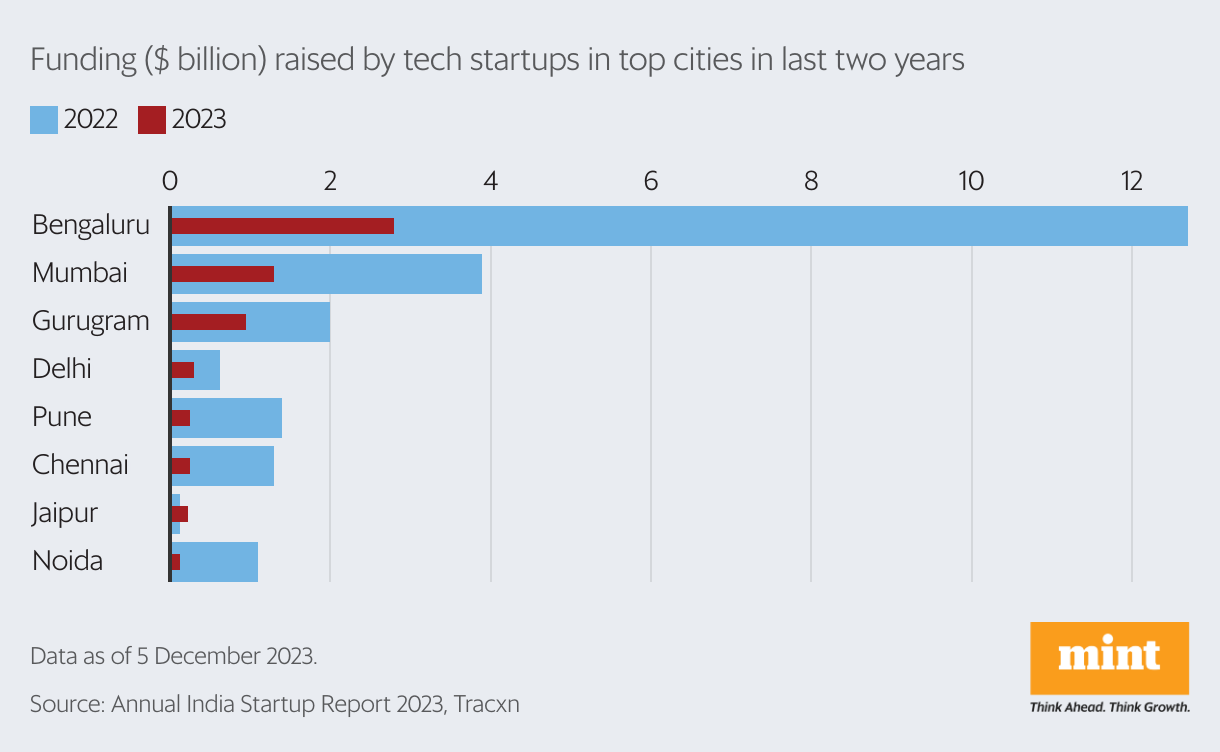
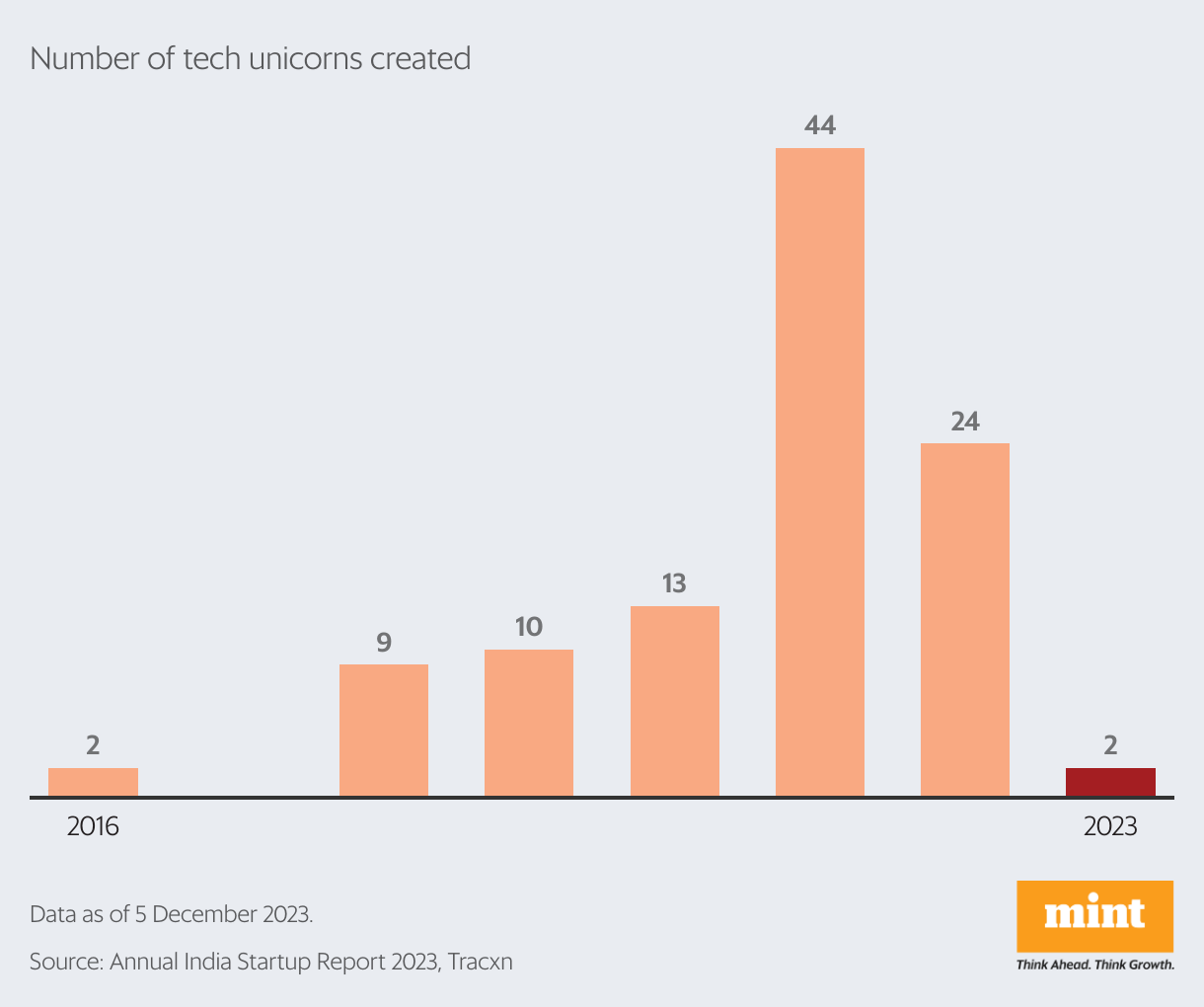
While startup hubs such as Bengaluru, Mumbai, and Delhi-NCR continued to attract significant funding, they, too, saw a decline. The unicorn tally shrank significantly: just two new ones—Incred and Zepto—have been created in the year so far, compared to 24 in 2022.
Shifting order
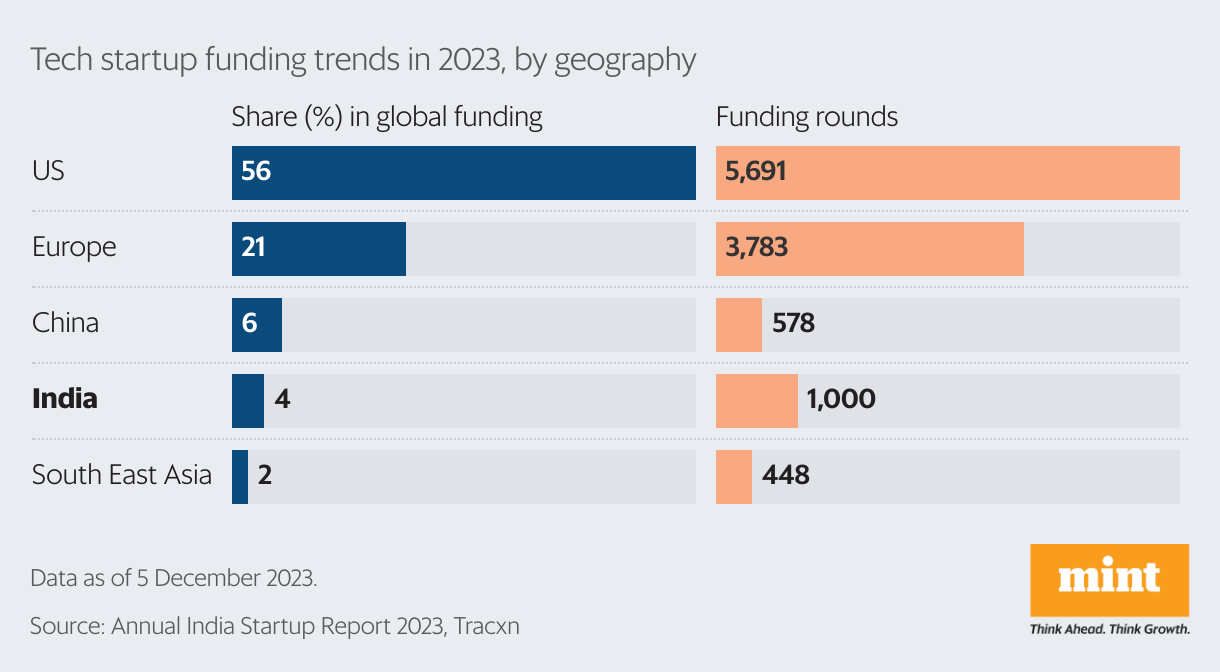
With a total funding of less than $10 billion received this year, India has slipped one notch to the fourth place among the highest-funded startup geographies globally in 2023. It had been at the third rank in the last two years. The country now accounts for almost 4% of the global funding, while China at the third spot had a 6% share.
Bright spots?
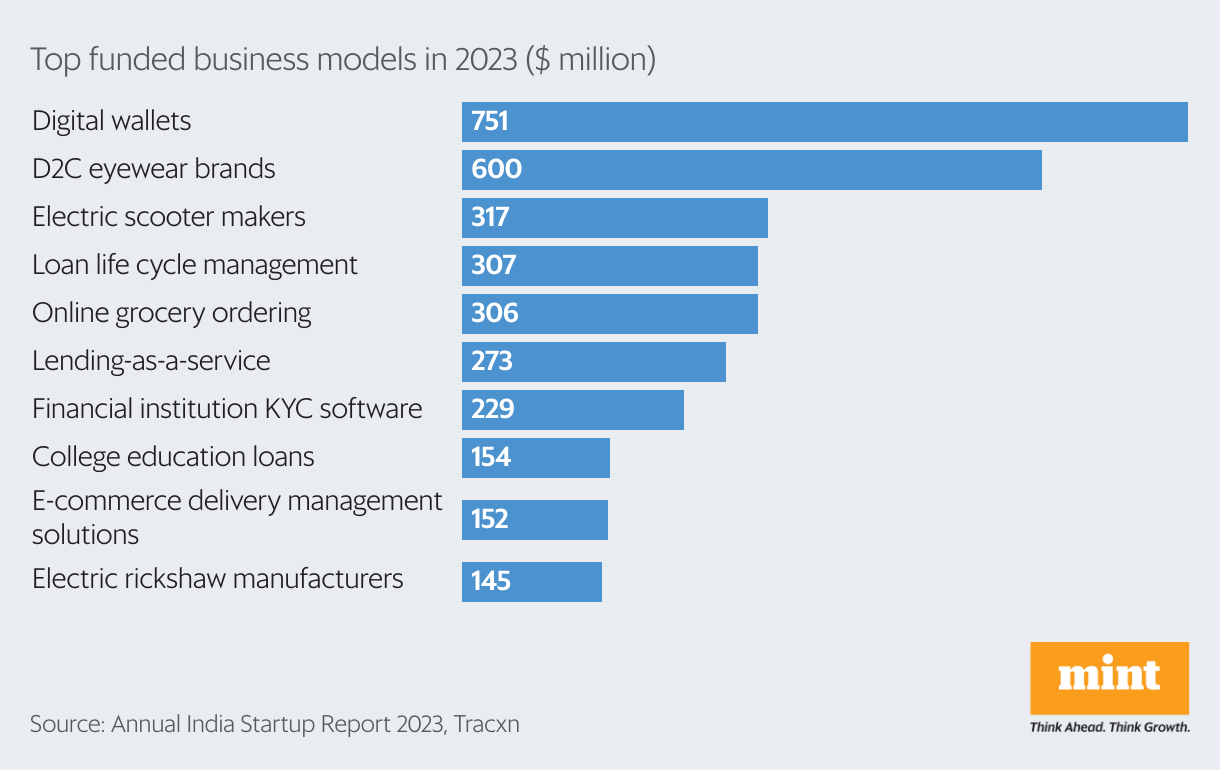
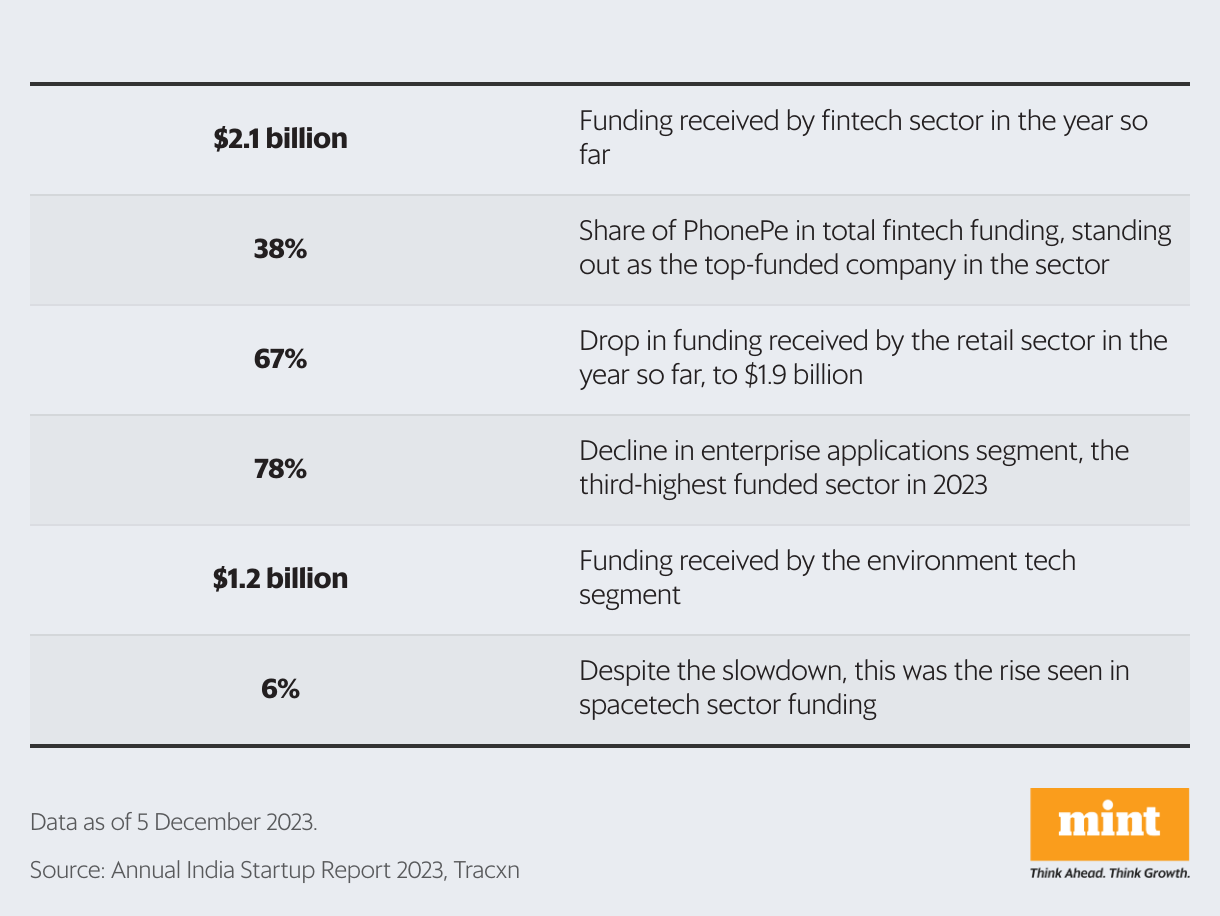
Fintech, retail and enterprise applications have been the top-performing sectors in terms of funding in 2023 till date. However, these, too, have seen big drops in funding. Despite the overall funding slowdown, fast-evolving sectors such as environment tech and spacetech have managed to garner investors’ attention.

What lies ahead?
“While the funding slowdown in 2023 presents challenges for the Indian tech startup ecosystem, we remain optimistic about the future,” said Neha Singh, co-founder, Tracxn. “With favourable government policies and a fast-growing economy, we believe India is well-positioned for success in the years to come. Our (Indian startups’) focus remains on innovation and creating value, and we are confident that the industry will rebound and flourish.”
Ankit Kedia, founder and lead investor, Capital A, also said the future remained promising. “Despite the downturn, the emergence of bridge-round funding becoming a norm indicates an ecosystem that can take challenges and believe in the value proposition,” he said. “Looking forward, anticipate a renewed focus on deep tech, regional expansions, and a rise in impactful, sustainable initiatives.”
